Open-pit mining depends heavily on efficient material movement. Rock, ore, overburden, and other materials often need to travel between loading areas, processing facilities, stockpiles, and dumping zones.
In this environment, the performance of mining trucks can directly affect how smoothly the entire hauling cycle operates. A truck that spends too much time waiting, traveling empty, or dealing with mechanical problems can reduce overall productivity.
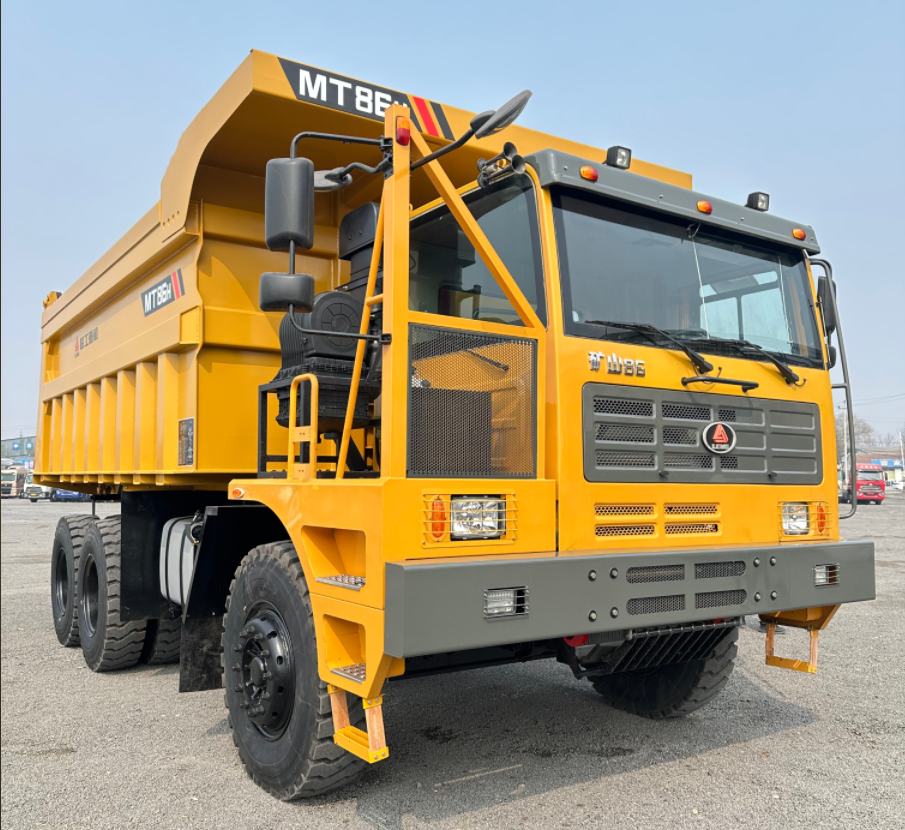
This is why heavy-duty LGMG mining trucks are worth considering for open-pit mining operations. Their value is not simply related to carrying capacity. The right truck can also help contractors organize hauling cycles, match loading equipment, and maintain consistent material movement.
For mining companies looking for a used LGMG mining truck for sale, understanding how the truck fits into the entire transportation process is essential.
Why Hauling Efficiency Matters in Open-Pit Mines
Open-pit mining usually involves multiple stages of material movement.
Excavators or loaders first collect material, while mining trucks transport it to another location. After unloading, the trucks return to the loading area and begin another cycle.
Even small delays can accumulate when this process is repeated throughout the day.
Common causes of lost time include:
- Long loading queues
- Slow travel between loading and dumping points
- Poorly planned routes
- Excessive empty travel
- Mechanical downtime
- Mismatched loading and hauling capacity
A suitable LGMG heavy-duty mining truck can become an important part of a well-organized hauling system.
Matching Mining Trucks with Loading Equipment
A mining truck does not work alone.
Excavators and wheel loaders need to work together with haul trucks to create an efficient material-handling cycle.
If a loader fills a truck too quickly and other trucks are not available, the loading equipment may spend time waiting. On the other hand, if too many trucks arrive at once, vehicles may form a queue.
For this reason, selecting the right number and capacity of used LGMG mining trucks for open-pit mines should involve more than looking at the truck itself.
Mining operators should consider:
- Loader bucket capacity
- Truck body capacity
- Loading time
- Travel distance
- Unloading time
- Number of hauling cycles
- Road conditions
The goal is to create a balanced workflow between loading and transportation.
Reducing Unproductive Travel Time
One of the biggest opportunities for improving mining efficiency is reducing unnecessary travel.
Mining trucks can spend a significant amount of time traveling between different areas of a large open-pit site.
Route planning can therefore make a meaningful difference.
Operators can review:
- Loading locations
- Dumping points
- Road gradients
- Traffic conditions
- Average travel distance
- Return routes
A heavy-duty LGMG mining truck for material hauling can contribute to efficient operations when its capacity and performance are appropriate for the site’s transportation routes.
The truck itself cannot solve poor route planning, but suitable equipment can support a more consistent hauling cycle.
Handling Rock, Ore, and Overburden
Open-pit mines may need to transport different types of material during the same project.
Ore may need to be delivered to processing areas, while overburden and waste rock may be moved to designated dumping locations.
This means mining trucks need to support different transportation tasks.
A used LGMG mining truck for ore hauling can be considered for material transportation where the truck configuration and operating conditions are suitable.
The same principle applies to construction materials, rock, and overburden transportation.
Before purchasing, however, operators should always match the vehicle’s specifications with the actual material and working environment.
Why Payload Capacity Is Only Part of the Equation
It can be tempting to choose a mining truck based entirely on its advertised payload.
However, hauling efficiency depends on more than how much material the truck can carry.
A larger truck may transport more material per cycle, but if the loading equipment cannot fill it efficiently or the road conditions restrict its operation, the theoretical capacity may not translate into higher productivity.
Therefore, when evaluating a heavy-duty LGMG mining truck for sale, buyers should consider the complete operating system.
Factors such as loading time, cycle time, fuel consumption, road conditions, maintenance requirements, and truck availability can all influence actual performance.
Working on Challenging Mine Roads
Open-pit mine roads can be very different from ordinary highways.
They may include steep sections, uneven surfaces, loose materials, sharp turns, and frequently changing routes.
These conditions can place additional demands on heavy-duty mining equipment.
A used LGMG mining truck for quarry and mining operations should therefore be evaluated according to the environment where it will work.
Tires, suspension, brakes, chassis condition, and drivetrain components are especially important when a used truck is expected to operate on demanding haul roads.
Supporting Continuous Material Movement
Mining operations often run according to carefully planned production schedules.
If trucks are unavailable, excavators and loaders may have to wait. If loading equipment stops, trucks may also remain idle.
Maintaining a suitable number of operational trucks can help keep the material movement cycle more consistent.
For companies expanding their operations, second hand LGMG mining trucks may provide a way to add hauling capacity without building an entirely new fleet.
The condition and maintenance history of each used truck should still be carefully evaluated before purchase.
Used LGMG Mining Trucks for Growing Fleets
A mining company does not always need to purchase brand-new equipment when increasing fleet capacity.
A properly inspected used heavy-duty LGMG mining truck can provide another option for companies looking to increase transportation capability.
Used equipment may be considered when a company needs to:
- Add trucks for a new project
- Replace older units
- Increase hauling capacity
- Support seasonal production
- Expand an existing mining fleet
The most important consideration is whether the truck’s actual condition matches the workload expected from it.
What Should Buyers Check?
Before purchasing a used LGMG mining truck for sale, buyers should evaluate the complete vehicle rather than focusing only on mileage or appearance.
Important areas include:
Engine and Drivetrain
Check engine performance, transmission operation, and other drivetrain components.
Dump Body
Inspect the body for excessive wear, deformation, cracks, or corrosion, especially if the truck previously transported abrasive materials.
Chassis
Look for structural damage or signs of major repairs.
Suspension and Tires
These components are important for vehicles operating on uneven mining roads.
Braking System
Reliable braking performance is particularly important when trucks operate on slopes or carry heavy loads.
Maintenance History
Service records can help buyers understand how the vehicle was previously used and maintained.
Why Choose Rhino Trucks?
For international mining companies and equipment buyers, finding the right used mining truck requires more than comparing prices.
The vehicle needs to match the mine’s road conditions, material type, transportation distance, loading equipment, and expected workload.
Rhino Trucks provides used commercial trucks and heavy-duty equipment for international customers.
For buyers searching for a used LGMG mining truck supplier, Rhino Trucks can offer practical equipment options for mining, quarrying, construction, and material-hauling applications.
By considering the complete project requirements, buyers can make a more informed decision when adding used mining equipment to their fleet.
Conclusion
So, can heavy-duty LGMG mining trucks improve hauling efficiency at open-pit mines?
They can, when the truck is properly matched to the overall hauling system.
Efficient mining transportation depends on more than payload capacity. Loading equipment, route distance, road conditions, cycle time, truck availability, and maintenance all influence the final result.
A suitable used LGMG mining truck can support the continuous movement of ore, rock, overburden, and other materials while helping mining companies expand their hauling capacity.
For buyers considering used equipment, the key is to evaluate the complete vehicle and match it to the actual working environment.
With Rhino Trucks, international customers can explore used LGMG mining trucks and other heavy-duty vehicles for demanding mining and construction applications.